There’s something uniquely disorienting about watching the sun set twice in one day—first through your departure lounge window, then again from 35,000 feet as you chase the horizon westward. For those who live with one foot in New York and the other in Los Angeles, time becomes a fluid concept, a mental math problem solved on cocktail napkins and in calendar apps. Enter the GMT watch: a mechanical solution to a very modern problem that predates the smartphone by decades. Originally developed for pilots crossing multiple time zones, these timepieces have evolved into the ultimate tool for frequent cross-country flyers who value both precision and the quiet confidence of analog craftsmanship.
Unlike standard watches that tell time in one location, a GMT complication displays two (or sometimes three) time zones simultaneously, allowing you to track your home time while adjusting to local time at your destination. But not all GMT watches are created equal, and the savvy traveler understands that choosing the right one involves far more than simply picking a handsome dial. Let’s explore what makes these watches indispensable for the jet-set lifestyle and how to select the perfect companion for your transcontinental journeys.
Top 10 GMT Watches for Frequent Flyers
Detailed Product Reviews
1. Alpina Men’s Swiss Startimer Worldtimer Quartz Watch, Stainless Steel, GMT, Sapphire Crystal
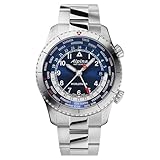
Overview: The Alpina Startimer Worldtimer delivers Swiss quartz precision in a refined pilot’s watch package. This 41mm timepiece features a brushed and polished stainless steel two-part case with genuine worldtimer functionality, displaying all 24 time zones alongside a GMT hand and date complication at 3 o’clock. Designed for travelers who prioritize accuracy and practicality, it bridges the gap between entry-level field watches and luxury automatic worldtimers.
What Makes It Stand Out: Full worldtimer capability distinguishes this from basic GMT watches, allowing simultaneous tracking of global time zones. The anti-reflective sapphire crystal and 100-meter water resistance exceed typical standards for watches in this class. Alpina’s aviation heritage manifests in the clean, legible dial design that emphasizes function over ornamentation, while the two-part case construction provides satisfying heft and finish quality.
Value for Money: At $1,195, it strategically positions itself between fashion quartz watches and luxury automatic worldtimers costing $3,000+. The investment buys Swiss engineering and legitimate complications rather than mechanical prestige. Quartz accuracy of ±10 seconds per year eliminates expensive servicing, making it economically sensible for frequent travelers who need reliable, maintenance-free performance.
Strengths and Weaknesses:
- Pros: True worldtimer complication; Swiss build quality; excellent AR sapphire crystal; 100M water resistance; maintenance-free accuracy
- Cons: No luminous material specified; quartz movement lacks collector appeal; 41mm may wear modestly on larger wrists; limited strap options
Bottom Line: A pragmatic choice for travelers prioritizing function and Swiss heritage over mechanical romance. Perfect for pilots and business travelers needing reliable dual-time tracking without the automatic price premium.
2. RAYMOND WEIL Freelancer GMT Worldtimer Men’s Watch, 24 Cities and Time Zones, Green Dial, Indexes, Green Leather Watch, 41mm (Model: 2765-SBC-52001)

Overview: The Raymond Weil Freelancer GMT Worldtimer elevates travel watches with sophisticated aesthetics and Swiss automatic craftsmanship. This 41mm piece features a striking green gradient dial housed in a stainless steel and bronze case, powered by the Calibre RW3230 automatic movement with 50-hour power reserve. It tracks 24 time zones while maintaining elegance suitable for boardrooms and adventures alike.
What Makes It Stand Out: The bronze case elements create a unique patina over time, making each watch distinctive. Super-LumiNova hands and indexes emit a captivating blue/green glow for exceptional low-light legibility. The green leather strap complements the gradient dial perfectly, while the automatic movement offers horological credibility that quartz competitors cannot match at this price tier.
Value for Money: At $1,898.99, this sits in the accessible luxury segment. You’re paying for Swiss automatic engineering, premium materials like bronze, and Raymond Weil’s independent brand heritage. Compared to similar worldtimers from larger Swiss houses costing $4,000+, this offers comparable complications with more distinctive design. The 50-hour power reserve exceeds many competitors.
Strengths and Weaknesses:
- Pros: Swiss automatic movement; unique bronze accents; excellent lume; 50-hour power reserve; sophisticated green aesthetic
- Cons: Higher price point; bronze requires maintenance; green strap limits versatility; 100M water resistance not specified
Bottom Line: An excellent choice for watch enthusiasts wanting Swiss automatic prestige with distinctive design. The bronze elements and green dial create personality, while the worldtimer function delivers practical utility for discerning travelers.
3. SEIKO Men’s SSK025 5 Sports Field GMT Watch

Overview: Seiko’s SSK025 5 Sports Field GMT democratizes mechanical travel watches with Japanese reliability at an unbeatable price point. This automatic GMT features a distinctive red GMT hand for tracking second time zones, housed in a stainless steel case with thick, curved glass that evokes vintage field watch aesthetics. Manual winding capability provides flexibility when the watch sits idle, making it practical for occasional wearers.
What Makes It Stand Out: The SSK025 delivers a true automatic GMT movement for under $350, a feat previously unimaginable in Swiss watches. Seiko’s legendary 5 Sports reliability ensures robust daily wear, while the red GMT hand provides excellent at-a-glance legibility against military-inspired dials. The thick, curved glass adds vintage character absent in modern flat-crystal designs, creating a unique visual presence that distinguishes it from sterile competitors.
Value for Money: At $348, this represents extraordinary value. Comparable Swiss automatic GMTs start at $2,000+, making this 85% less expensive while delivering 90% of the functionality. The Seiko 4R34 movement offers hacking and hand-winding, features often omitted in entry-level watches. It’s the definitive budget-conscious choice for mechanical watch purists wanting genuine complications without financial compromise.
Strengths and Weaknesses:
- Pros: Incredible affordability; reliable Seiko automatic movement; manual winding; distinctive red GMT hand; vintage-inspired curved crystal
- Cons: No sapphire crystal specified; limited water resistance details; basic bracelet quality; no advanced lume; lacks true “flyer” GMT function
Bottom Line: The undisputed champion for entry-level mechanical GMT watches. Perfect for enthusiasts wanting automatic movement without luxury pricing, or travelers needing reliable dual-time functionality on a strict budget.
4. Kronsegler Fernando de Magallanes Worldtimer Flyer GMT Mens Wristwatch Automatic Steel Black

Overview: The Kronsegler Fernando de Magallanes offers serious horological value with its true Flyer GMT complication in a sub-$900 package. This mechanical worldtimer features a fast-beat automatic movement (28,800 A/H) with 24 jewels and Glucydur balance, allowing independent hour hand adjustment for travelers. The black dial with Arabic indexes provides excellent legibility, while the triple anti-reflective sapphire crystal ensures durability.
What Makes It Stand Out: The “true GMT” function lets you adjust local time in one-hour jumps without stopping the watch, a feature typically found in watches costing thousands more. The Glucydur balance offers superior hardness and stability compared to standard brass alternatives. Diamond-decorated second and 24-hour hands add subtle elegance, while the slim GMT hand provides functionality without dial clutter.
Value for Money: At $816.33, this delivers premium complications at a fraction of luxury prices. Comparable true GMT watches from Swiss manufacturers start around $3,500. The inclusion of a fast-beat movement, Glucydur balance, triple AR sapphire, and genuine leather strap with folding clasp represents exceptional specification for the price. It’s a value proposition that’s hard to ignore.
Strengths and Weaknesses:
- Pros: True Flyer GMT function; high-beat movement; Glucydur balance; triple AR sapphire; bidirectional date setting; quality leather strap
- Cons: Lesser-known German brand; limited resale value; 40-hour power reserve is modest; may lack prestige of Swiss marques; styling is derivative
Bottom Line: A hidden gem for horology enthusiasts wanting true GMT functionality without luxury pricing. Ideal for frequent travelers who appreciate mechanical sophistication and German engineering precision over brand recognition.
5. GMT Watches for Men Automatic 45MM Date 10ATM Waterproof Seagull ST2557 Movement LuminousStainless Steel Sapphire Glass Mechanical Wristwatches White

Overview: This no-name GMT watch delivers impressive specifications at a budget price point that seems almost unbelievable. Powered by the Chinese Seagull ST2557 automatic movement, it features a substantial 45mm 316L stainless steel case with 10ATM water resistance and genuine sapphire glass. The white dial with super luminous coating provides legibility in all conditions, while the nylon-silicone composite strap balances durability and comfort for active wear and high-intensity activities.
What Makes It Stand Out: The 10ATM (100-meter) water resistance and sapphire crystal at $129.99 are remarkable specifications that defy conventional pricing logic. The Seagull movement offers dual-time functionality in a rugged, industrial design that exceeds expectations for a budget Chinese watch. Super luminous hands and GMT scale provide visibility for outdoor adventures and night running, while the 316L steel case ensures corrosion resistance in harsh environments.
Value for Money: At $129.99, this is arguably the cheapest automatic GMT available with legitimate specifications. Comparable watches with sapphire and 100M resistance typically cost $300+. While the Seagull movement lacks Swiss prestige, it delivers functional timekeeping at 1/10th the price of entry-level Swiss GMTs. It’s disposable pricing with surprising durability and performance.
Strengths and Weaknesses:
- Pros: Unbeatable price; genuine sapphire crystal; 10ATM water resistance; super luminous; 316L steel case; rugged aesthetics
- Cons: Unknown brand reliability; Chinese movement lacks refinement; 45mm may be too large for many wrists; questionable long-term durability; limited warranty support
Bottom Line: Perfect for adventurers wanting GMT functionality without financial risk. Treat it as a beater watch for travel, sports, or hazardous environments where luxury pieces fear to tread. Surprisingly capable for the price.
6. ADDIESDIVE GMT Watches for Men Two Tone Watch 515-24H Quartz Movement Waterproof 200 M BGW9 Blue Luminous

Overview: The ADDIESDIVE GMT delivers Swiss quartz precision in a striking two-tone design that belies its budget-friendly price. Featuring a red-blue “Pepsi” bezel, 200-meter water resistance, and the reliable Ronda 515-24H movement, this 40mm timepiece targets enthusiasts seeking genuine GMT functionality without the typical four-figure investment. The BGW9 blue luminous system promises five hours of glow time, while the screw-down crown ensures legitimate diving credentials beyond desk duty.
What Makes It Stand Out: The Pepsi-style bezel at this price point is genuinely remarkable, offering true GMT tracking with Swiss quartz accuracy. Unlike many budget alternatives that merely mimic the aesthetic, this watch provides functional 24-hour tracking. The screw-down crown and 200m rating make it suitable for actual underwater use, not just splash resistance. The two-tone finish adds versatility, transitioning seamlessly from office environments to weekend adventures without looking out of place.
Value for Money: At $84.99, this watch dramatically undercuts competitors offering similar specifications. Swiss quartz GMT movements typically appear in watches costing $200+, while 200m resistance is rare below $150. The BGW9 lume represents a premium feature usually reserved for higher-end pieces. You’re getting legitimate tool-watch specifications at fashion-watch pricing, making it an exceptional entry point for GMT complications or a capable beater for seasoned collectors.
Strengths and Weaknesses: Pros: Swiss Ronda movement; 200m water resistance; vibrant BGW9 lume; functional Pepsi bezel; versatile two-tone design; compact 40mm case Cons: Mineral crystal (not sapphire); unknown bracelet long-term durability; limited brand heritage; lume duration shorter than premium alternatives
Bottom Line: For under $85, the ADDIESDIVE GMT delivers specifications that defy its price class. While material compromises exist, the core functionality and water resistance make it a compelling purchase for budget-minded buyers who want real performance, not just styling. It’s an ideal beater watch or entry-level GMT that you can actually take diving.
7. Stuhrling Original Men’s Stainless Steel Jubilee Bracelet GMT Watch Quartz, Dual Time, Quickset Date with Screw Down Crown, Water Resistant up to 10 ATM
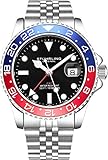
Overview: Stuhrling’s Meridian GMT Diver brings Swiss quartz precision to a classic 42mm platform, balancing tool-watch capability with dressier aesthetics. With 100-meter water resistance and a distinctive jubilee bracelet, this watch targets the modern professional seeking dual-time functionality in a versatile daily wearer. The screw-down crown and quickset date add practical convenience, while the established brand name provides reassurance absent from many microbrand alternatives.
What Makes It Stand Out: The jubilee bracelet distinguishes it from typical oyster-style competitors, offering enhanced comfort and a more refined, jewelry-like appearance. Stuhrling’s brand presence means established warranty support and customer service—significant advantages over unknown manufacturers. The quickset date function provides everyday convenience, and the 42mm case delivers contemporary wrist presence without venturing into oversized territory, making it suitable for various wrist sizes.
Value for Money: At $109.95, it occupies a competitive mid-tier position. While 100m resistance lags behind cheaper alternatives offering 200m, the Stuhrling name and jubilee bracelet justify the modest premium. Swiss quartz reliability and decent finishing make it fairly priced against fashion brands like Invicta, though value seekers might find better raw specifications from microbrands. You’re paying partially for brand recognition and proven distribution channels.
Strengths and Weaknesses: Pros: Reputable brand name; comfortable jubilee bracelet; Swiss quartz accuracy; screw-down crown; quickset date; versatile 42mm size Cons: Only 100m water resistance; no sapphire crystal; limited lume description; higher price than spec-comparable alternatives; potentially polarizing two-tone design
Bottom Line: The Stuhrling Meridian GMT appeals to buyers prioritizing brand recognition and bracelet comfort over maximum specifications. It’s a solid daily wear option that bridges casual and professional settings, though value seekers might find better specs elsewhere. Consider it for the jubilee bracelet and established warranty support rather than class-leading water resistance.
8. Pagani Design Watches Men GMT Automatic Self-Winding Mechanical Analog Sapphire Sports Waterproof Luminous Wrist Watch

Overview: Pagani Design’s automatic GMT offers mechanical sophistication at quartz pricing, a rare proposition in the watch world. This 42mm sports watch features a self-winding movement, sapphire crystal, and 100-meter water resistance. The orange GMT hand tracks a second timezone against luminous markers, while the stainless steel bracelet provides durable wearability. It targets enthusiasts seeking the tactile pleasure of mechanical horology without the typical financial commitment.
What Makes It Stand Out: The automatic movement is the undeniable star—offering mechanical charm and eliminating battery concerns entirely. Sapphire crystal provides superior scratch resistance rarely seen at this price point, ensuring the dial remains pristine for years. The vibrant orange GMT hand adds legible flair, while the screw-down crown enhances water resistance credibility. It’s a mechanical GMT for under $130, which remains exceptional in today’s market.
Value for Money: At $129.99, this represents incredible value for an automatic GMT with sapphire crystal. Comparable mechanical GMTs from established brands typically start at $300+, often with similar unspecified movements. While the movement’s origin remains unstated, the feature set—including 100m resistance and solid bracelet—dramatically outperforms the price point. It’s a mechanical gateway drug for those curious about horology without financial regret.
Strengths and Weaknesses: Pros: Automatic self-winding movement; sapphire crystal; 100m water resistance; attractive orange GMT hand; adjustable bracelet; excellent price for mechanical features Cons: Unknown movement durability; unspecified lume quality; brand lacks prestige; 100m rating limits serious diving; potential rotor noise
Bottom Line: For mechanical watch enthusiasts on a budget, this Pagani Design is nearly unbeatable. It delivers core luxury features—automatic movement and sapphire crystal—at an entry-level price. While not for serious diving or brand-conscious buyers, it’s perfect for experiencing mechanical GMT functionality without significant investment. Temper expectations regarding long-term durability, but embrace the mechanical joy.
9. Pagani Design Watches for Men Automatic Mechanical GMT 42mm Sport Waterproof Stainless Steel Sapphire Glass Wrist Watch (Orange)

Overview: Pagani Design’s orange-accented GMT automatic delivers mechanical horology in a sporty 42mm package. Featuring an unspecified automatic movement, sapphire glass, and 100-meter water resistance, this watch targets enthusiasts seeking the tactile pleasure of self-winding mechanics. The stainless steel construction and GMT complication offer substantial value, while the vibrant orange theme provides distinctive aesthetics in a sea of monochrome divers. It’s built for the mechanically inclined budget buyer.
What Makes It Stand Out: The vibrant orange colorway provides immediate visual distinction, setting it apart from generic black-dial alternatives. Automatic GMT movements under $130 remain rare, making this a standout for mechanical purists who value the sweeping seconds hand and rotor-powered operation. Sapphire crystal ensures long-term clarity and scratch resistance, while the 42mm case hits the modern sweet spot. It’s a mechanical GMT that doesn’t require microbrand hunting or vintage risks.
Value for Money: At $125.99, it’s priced aggressively for an automatic GMT with sapphire crystal. The value proposition mirrors its sibling model, offering mechanical sophistication at quartz prices. While 100m water resistance trails some cheaper quartz options, the self-winding movement and sapphire justify the cost for enthusiasts prioritizing mechanics over maximum depth rating. It’s essentially a mechanical engine with luxury trimmings at entry-level pricing.
Strengths and Weaknesses: Pros: Automatic mechanical movement; sapphire glass; 42mm versatile size; stainless steel construction; distinctive orange design; 100m water resistance Cons: Unbranded movement reliability unknown; limited lume details; only 100m resistance; brand perception issues; potential quality control variance
Bottom Line: This Pagani Design serves as an accessible entry to mechanical GMT watches, sacrificing some water resistance and brand prestige for core mechanical features at an unbeatable price. Ideal for enthusiasts wanting to explore automatic movements without significant investment, though buyers should temper expectations regarding long-term durability and resale value. It’s about the mechanical experience, not the name on the dial.
10. ADDIESDIVE Men’s Watches GMT Watch Quartz, Dual Time, Quickset Date with Screw Down Crown, Swiss Movement Waterproof 200M Luminous AD2036 GMT Watch for Men

Overview: ADDIESDIVE’s AD2036 GMT quartz watch delivers Swiss movement precision with 200-meter water resistance at an accessible sub-$90 price point. The 316L stainless steel construction features a bubble mirror mineral glass with blue anti-glare coating, while yellow luminous markers ensure nighttime visibility. This watch targets budget-conscious buyers seeking serious water resistance and dual-time functionality without aesthetic compromise, offering legitimate diving credentials in a vintage-inspired package.
What Makes It Stand Out: The 200-meter rating combined with Swiss quartz movement creates a compelling tool-watch package under $90. The bubble mirror design adds vintage character rarely seen at this price, while the blue anti-glare coating demonstrates unexpected attention to detail. Yellow super luminous powder offers a distinctive aesthetic alternative to standard green, and the screw-down crown provides legitimate diving credentials that match watches costing significantly more.
Value for Money: At $89.99, this watch challenges even its own brand’s value proposition. The 200m resistance, Swiss Ronda movement, and solid steel construction deliver specifications typically found in $200+ watches from established brands. While mineral crystal is a compromise, the overall package—including five-year battery life—represents exceptional affordability for a capable GMT diver. It’s tool-watch functionality at fashion-watch pricing.
Strengths and Weaknesses: Pros: Swiss 515-24H quartz movement; 200m water resistance; 316L stainless steel; unique yellow lume; bubble mirror character; five-year battery life; screw-down crown Cons: Mineral crystal not sapphire; unknown bracelet quality; limited brand heritage; lume color may not suit all tastes; conservative design language
Bottom Line: The ADDIESDIVE AD2036 is a no-nonsense tool watch prioritizing function and water resistance over frills. For under $90, it offers legitimate diving capabilities with Swiss quartz reliability. It’s an excellent beater watch or entry-level GMT for those who actually plan to get wet, though collectors may prefer sapphire crystal and stronger brand recognition. Performance per dollar is outstanding.
Understanding the GMT Complication
The GMT complication traces its lineage to the golden age of transatlantic flight, when Pan American Airways needed a reliable way for their crews to track both local and Greenwich Mean Time. At its core, a GMT watch adds a fourth hand—the 24-hour hand—that completes one full rotation around the dial every 24 hours, rather than the standard 12-hour cycle of the primary hour hand. This hand points to a 24-hour scale, typically on the watch’s bezel or an inner ring, allowing you to instantly read a second time zone.
What separates a true GMT from simpler dual-time displays is the relationship between the hands. In a proper GMT movement, the 24-hour hand is independently adjustable, letting you set it to home time while the main hour hand jumps forward or backward in one-hour increments as you cross time zones. This mechanical elegance means you’ll never lose track of whether it’s an appropriate hour to call your family or check in with the office.
Why Cross-Country Flyers Need a GMT Watch
Frequent cross-country travel presents unique challenges that go beyond simple time zone math. When you’re alternating between Eastern and Pacific time weekly, your circadian rhythm becomes a suggestion rather than a rule. A GMT watch serves as an anchor to your home base, providing psychological grounding and practical functionality. Glancing at your wrist to see that it’s 3 AM back home can stop you from making that ill-advised phone call that wakes your entire household.
Moreover, the best GMT watches for travelers offer intuitive operation that doesn’t require a manual at 30,000 feet. When you’re groggy from a 6 AM flight and facing a full day of meetings, the last thing you need is a watch that requires complex crown manipulation. The right complication becomes second nature, allowing you to adjust local time with a few simple clicks while your home time remains steadfast.
Types of GMT Movements Explained
The “Traveler” vs. “Caller” Distinction
Watch enthusiasts often debate the merits of “Traveler” and “Caller” GMT movements, and understanding this difference is crucial for cross-country flyers. A Traveler GMT features an independently adjustable local hour hand that jumps in one-hour increments, leaving the 24-hour hand and minutes untouched. This is the gold standard for actual travel, as you can land in Los Angeles and quickly set your watch back three hours without disrupting the precise synchronization of your home time.
Caller GMTs, conversely, have an independently adjustable 24-hour hand while the main hour hand moves conventionally. These are better suited for tracking someone else’s time zone—perhaps a colleague in London or a satellite office—while you remain stationary. For the frequent flyer, the Traveler GMT is non-negotiable.
Mechanical vs. Quartz Precision
Mechanical GMT movements, whether Swiss or Japanese, offer the romance of traditional watchmaking and the satisfaction of a sweeping seconds hand. Modern movements often include hacking seconds and quick-set dates, making them practical travel companions. However, quartz GMT watches provide unparalleled accuracy and “grab-and-go” convenience—essential when you’re rushing to catch a flight and realize your mechanical piece stopped overnight. Some premium quartz movements even offer solar charging, eliminating battery concerns entirely.
Key Features to Prioritize
True Independent Adjustment
The hallmark of a travel-worthy GMT is the ability to adjust the local hour hand independently without stopping the watch. This feature, often called “true GMT” or “flyer GMT,” allows you to step off the plane and sync to local time in seconds. Test this functionality before purchasing: the hour hand should click forward or backward in precise one-hour jumps while the 24-hour hand continues its steady progression.
Crown Operation Simplicity
When you’re juggling carry-on luggage and a boarding pass, you need a watch that adjusts easily. Look for screw-down crowns that offer substantial grip and clear detents between positions. Some modern designs include a proprietary quick-adjust system that requires just the crown, while others hide pushers in the case sides. The best designs allow all adjustments without tools—because no one travels with a watchmaker’s loupe.
Date Function Considerations
A date complication that syncs with the local hour hand is invaluable. As you travel west to east, losing hours, the date should change automatically at midnight local time, not home time. Some advanced movements even include a date that can be set both forward and backward—a small detail that becomes profoundly important when you realize you’ve set the date wrong and don’t want to cycle through 31 days.
The 24-Hour Bezel: Your Time Zone Calculator
Fixed vs. Rotating Bezels
The bezel is where GMT watches truly differentiate themselves. Fixed bezels offer a clean, dressy aesthetic but limit you to the time zone printed on the dial. Rotating bezels, particularly bidirectional ones, transform your watch into a mechanical world timer. By rotating the bezel to align with your destination’s offset from GMT, you can read multiple time zones at a glance—a feature that becomes intuitive with practice.
Material Matters for Durability
Cross-country travel subjects your watch to temperature fluctuations, pressure changes, and occasional bumps. Ceramic bezels resist scratches and UV fading, maintaining their crisp markings after years of cockpit-grade sunlight exposure. Aluminum bezels develop a pleasing patina but scratch more easily. For the frequent flyer, ceramic’s durability often outweighs the vintage charm of aluminum.
Water Resistance for the Jet-Set Lifestyle
Understanding ATM Ratings
Water resistance ratings can be misleading. A 50-meter rating doesn’t mean you can dive to 50 meters—it means the watch can withstand static pressure equivalent to that depth. For travelers, 100 meters (10 ATM) provides practical protection against rain, hand washing, and the occasional spilled in-flight beverage. If your travels include beach destinations or poolside meetings, consider 200 meters for true peace of mind.
Real-World Implications for Travelers
Cabin pressure changes can compromise seals in poorly constructed watches. High-quality GMT watches use gaskets tested for aviation environments. Remember that water resistance degrades over time; have your watch pressure-tested annually if you’re a frequent flyer. The last thing you want is condensation under the crystal when you’re about to present to a boardroom.
Case Size and Wearability
The Sweet Spot for Most Wrists
For cross-country flyers who transition from business class to client dinners, versatility is key. Cases between 39mm and 42mm offer the best balance of presence and discretion. Smaller cases slip easily under shirt cuffs, while larger ones provide better legibility during chaotic travel days. Consider your wrist circumference: if you’re under 7 inches, lean toward 39-40mm; over 7 inches, 41-42mm offers proportional aesthetics.
Lug-to-Lug Considerations
Case diameter tells only part of the story. Lug-to-lug length—measured from the tip of one lug to the other—determines how the watch sits on your wrist. Ideally, this measurement should be equal to or slightly less than your wrist’s width. A 42mm case with compact lugs can wear smaller than a 40mm case with long, sprawling lugs. For travelers, a comfortable fit prevents the watch from catching on jacket sleeves or laptop bags.
Bracelet vs. Strap: Travel-Friendly Choices
The Metal Bracelet Advantage
A well-engineered bracelet offers unparalleled versatility, transitioning seamlessly from TSA checkpoints to steak dinners. Look for solid end links that reinforce the case connection and prevent rattling. Tool-less micro-adjustment clasps are a game-changer for travelers: as your wrist swells during flights, you can loosen the bracelet by a few millimeters without removing links. Some premium designs offer 5mm of on-the-fly adjustment.
Leather, Rubber, and NATO Options
Leather straps elevate a GMT watch for formal occasions but suffer in humid climates or during active travel. Rubber straps excel in durability and comfort but can feel too casual for business settings. The savvy traveler packs a NATO strap as backup—lightweight, secure, and easily swapped without tools. Consider quick-release spring bars that allow strap changes in an airplane bathroom, transforming your watch’s character in seconds.
Power Reserve Considerations
Minimum Recommended Reserve
For automatic watches, a 40-hour power reserve is the baseline—enough to survive a night on the nightstand. However, frequent flyers should target 70+ hours, allowing the watch to rest from Friday evening to Monday morning without stopping. Some modern movements offer 120-hour reserves, essentially providing a full five-day weekend of inactivity. This becomes crucial when you’re switching watches for different occasions during a multi-city trip.
Hand-Winding vs. Pure Automatic
Watches with hand-winding capability offer insurance against inactivity. Thirty turns of the crown can fully charge the mainspring, ensuring accuracy for your important meeting. Pure automatic watches without hand-winding require a watch winder or constant wear—impractical when you’re alternating between timepieces. For travel, the ability to manually wind is non-negotiable.
Legibility at 35,000 Feet
Lume That Performs
Cabin lighting varies dramatically—from blinding sunrise through oval windows to dimmed red-eye atmospheres. Superior lume should glow brightly after brief exposure to cabin lights and remain visible throughout a transcontinental flight. Look for multiple colors distinguishing the 24-hour hand from the primary hour hand, preventing confusion when glancing at your wrist in darkness.
Hand and Marker Design
High-contrast hands with distinct shapes prevent misreading. The 24-hour hand should be immediately identifiable—perhaps a different color or arrow tip. Applied indices catch light better than printed ones, improving legibility in variable cabin conditions. Anti-reflective coating on the underside of the crystal eliminates glare when you’re reading the time against bright window light.
Building a Versatile Travel Watch Collection
The One-Watch Philosophy
Some travelers subscribe to the one-watch philosophy: a single, do-everything GMT that handles boardrooms and beach bars with equal aplomb. This approach demands a watch with classic proportions, a bracelet, and a dial color that dresses up or down. Black or deep blue dials offer maximum versatility, while bezel colors should be conservative—think black, blue, or muted gray rather than bright red and blue “Pepsi” configurations.
The Multi-Watch Strategy
Alternatively, a two-watch travel kit provides specialized functionality. Pair a robust steel GMT with a lightweight titanium or carbon piece for active days. Or combine a mechanical GMT with a quartz backup that you can set and forget. The key is ensuring both watches share similar crown operation logic—adjusting one shouldn’t require remembering different procedures for the other.
Price Tiers and What to Expect
Entry-Level Excellence (Under $500)
Modern microbrands and established manufacturers offer surprising value below $500. Expect reliable quartz movements or basic mechanical calibers, solid stainless steel cases, and sapphire crystals. Water resistance typically ranges from 50-100 meters, and bracelets may use folded links rather than solid. These watches tell time accurately and handle travel abuse well, though they lack the refinement of pricier options.
Mid-Range Mastery ($500-$2,000)
This sweet spot delivers true GMT movements, solid bracelets with tool-less adjustment, and superior lume. You’ll find both Swiss and Japanese automatics with hacking and hand-winding, ceramic bezels, and 200-meter water resistance. Finishing improves dramatically, with polished case sides and brushed tops that catch light beautifully. For most frequent flyers, this range offers the best price-to-performance ratio.
Luxury Investment ($2,000+)
Luxury GMT watches justify their price through in-house movements, precious metals, and heirloom-quality finishing. Expect 70+ hour power reserves, proprietary quick-adjust systems, and bracelets engineered to perfection. Beyond prestige, these watches offer superior long-term reliability and serviceability. For the executive who logs 100,000+ miles annually, the cost-per-wear often makes financial sense.
Caring for Your GMT Watch
Travel Maintenance Protocols
Cross-country travel subjects watches to magnetic fields from security scanners, temperature shocks from tarmac to terminal, and vibration from constant movement. Store your watch away from electronic devices during flights, and consider a demagnetizer if you notice sudden accuracy issues. Rinse your watch with fresh water after exposure to salt air or chlorine, even if it’s rated for 200 meters.
Servicing Intervals for Heavy Users
Standard advice suggests servicing every 5-7 years, but frequent flyers should consider 3-5 year intervals. The constant crown manipulation for time zone changes accelerates wear on gaskets and stems. Establish a relationship with a reputable watchmaker who understands travel complications, and always service through authorized channels to maintain warranty coverage.
Style Tips for the Sophisticated Traveler
Business Travel Aesthetics
For the consultant or executive, understatement speaks volumes. A 40mm GMT with a black dial, polished bezel, and jubilee-style bracelet complements suits without drawing attention. The bezel should be subtle—no bright colors that clash with professional attire. Think of your watch as a silent credential, noticed by those who matter but never ostentatious.
Casual Adventure Looks
Weekend trips to mountain time zones or coastal getaways call for sportier aesthetics. A GMT with a matte finish, bold markers, and a rubber strap handles hiking trails and brewery visits with equal ease. Here, the classic “Pepsi” or “Coke” bezel becomes appropriate, adding visual interest to casual wear while remaining functional.
Airport to Boardroom Transition
The ultimate travel watch masters the transition. A quick strap swap—bracelet to leather—transforms your tool watch into a dress piece. Keep a strap-changing tool in your Dopp kit, and consider watches with drilled lug holes for easiest spring bar access. The goal is one watch that looks as appropriate with jeans and a carry-on as it does with a blazer and dress shoes.
Frequently Asked Questions
What’s the difference between a GMT watch and a dual-time watch?
A GMT watch displays two time zones using a 24-hour hand and a 24-hour scale, allowing you to track whether it’s day or night in the second zone. Dual-time watches typically use a sub-dial or an additional hour hand that reads against the standard 12-hour dial, requiring you to remember AM/PM. For frequent flyers, the GMT’s 24-hour format prevents those embarrassing 3 AM phone calls.
Can I track three time zones with a GMT watch?
Yes, with a rotating bezel. Set the 24-hour hand to your home time, adjust the main hour hand to local time, then rotate the bezel to align with a third time zone. For example, if you’re in Los Angeles (PST) but need to know London time, set the 24-hour hand to EST (your home), the main hand to PST, and rotate the bezel to GMT+0. This requires mental math but becomes intuitive with practice.
Do I need a rotating bezel, or is a fixed one sufficient?
For pure cross-country US travel, a fixed bezel works fine—you’re only dealing with three-hour differences. However, a rotating bezel offers future-proofing for international trips and provides that third time zone functionality. Bidirectional bezels are easier to adjust on the fly, while unidirectional bezels (more common on dive watches) offer less utility for travel.
Should I choose quartz or mechanical for frequent travel?
Quartz wins for grab-and-go convenience and accuracy—essential when you’re rushing between flights. Mechanical offers emotional connection and doesn’t require battery changes, but needs regular wearing or winding. Many seasoned travelers own both: a mechanical for daily wear and a quartz backup that lives in their carry-on, always set to home time and ready if their primary watch fails.
How accurate does my GMT watch need to be?
For travel purposes, ±10 seconds per day is acceptable—you’re not timing rocket launches. Mechanical watches in this range won’t cause missed connections. COSC-certified chronometers guarantee -4/+6 seconds daily, a nice luxury but not essential. Quartz movements should be within ±15 seconds per month. If your watch starts losing minutes per day, it likely needs servicing or demagnetization.
Can I swim with my GMT watch while traveling?
If it’s rated for 100 meters or more, yes—though 200 meters is safer for actual swimming. Rinse it afterward, especially in saltwater or chlorinated pools. Avoid hot tubs, as heat expands gaskets and compromises seals. Remember that water resistance is tested in static conditions; jumping into a pool creates dynamic pressure that can exceed the rating. When in doubt, take it off before cannonballing.
How often should I service my GMT watch if I travel monthly?
Aim for every 3-4 years rather than the standard 5-7. Frequent crown manipulation for time zone changes accelerates wear on the winding stem and gaskets. If you notice the crown feeling gritty or the watch fogging under the crystal, service immediately. Regular pressure testing between services is wise for peace of mind.
What’s the ideal case thickness for a travel GMT?
Under 13mm is ideal for sliding under shirt cuffs without catching. Many excellent GMTs achieve 12mm thickness while maintaining 200-meter water resistance. Ultra-thin options below 10mm exist but often compromise on durability or water resistance. For travel, prioritize robust construction over millimeter shaving—your watch needs to survive baggage handlers and armrest battles.
Are smartwatches better than GMT watches for travelers?
Smartwatches automate time zone changes and offer notifications, but they require daily charging and can feel intrusive. A GMT watch provides information at a glance without digital distractions, works for days without intervention, and never needs a software update. Many frequent flyers use both: a smartwatch for fitness tracking and a GMT for timekeeping, appreciating the analog watch’s reliability when the smartwatch dies mid-trip.
How do I correctly set my GMT watch when landing in a new time zone?
Upon landing, pull the crown to the first position and jump the local hour hand backward or forward in one-hour increments until it matches local time. The 24-hour hand remains fixed to home time, and the minutes stay synchronized. If your watch has a quick-set date, ensure it changes correctly at midnight local time. Some advanced movements require the crown in a second position—consult your manual, but the principle remains: move only the hour hand, preserve everything else.